
AI content workshops: your team uses AI to produce content that AI answer engines cite
Want your team to produce content with AI that ChatGPT, Perplexity, and Google AI understand and cite? Then we'll work on your real tasks, with AI workflows that fit your daily work and clear quality standards. GEO fundamentals are part of every workshop. You walk away with a tested process your team keeps using. I also offer AI tool trainings for specific tools like ChatGPT, Claude, and Canva.
At a glance
- What
- A hands-on workshop in which your team uses AI to produce content that works for people and for AI systems, from research all the way to the quality check.
- Who it's for
- B2B marketing and communications teams with a steady need for content and one person who takes ownership internally.
- Format
- A kickoff call to set goals, clearly limited prep, a half-day or full-day training, and the agreed templates and next steps.
- Outcome
- A tested workflow, practical resources your team can use, and a clear picture of how your team moves forward.
- Track record
- Built and led an AI content marketing academy with contentbird, with more than 500 participants. 20 years in editorial and content.
- Principle
- The workshop stands on its own. Follow-up support can be booked separately if you want it.
What happens in an AI content workshop?
In an AI content workshop, your team uses AI on real tasks from its own daily work: a brief, an expert article, a LinkedIn post, a page that needs a rewrite. Along the way we test workflows that fit your topics and your brand, and we define what a good result looks like.
The common thread in every workshop: building content that AI systems can understand and cite. That means the answer up front, clear statements, facts with sources, and a structure that people and machines can follow. Those are the fundamentals of GEO, and they make content better for human readers, too.
How this differs from a general AI training: the focus is the task, not the tool. After the workshop, your team knows how to handle a specific task with AI from now on, and how to keep the quality up while doing it. If you want to learn a specific tool, the AI tool trainings further down are the right fit.
Who the workshop is for
The workshop pays off most when there's already something we can work on. Here's what that usually looks like:
- You have content and a steady need for more. Blog, expert articles, press releases, LinkedIn, website.
- One person takes ownership internally. They keep things moving after the workshop.
- You have a specific project in mind. For example: writing briefs faster and better, checking expert articles more thoroughly, or building a LinkedIn presence for your experts.
- Your team wants direction and practice, not promises of quick revenue gains.
Possible focus areas
GEO-ready content is part of every workshop. On top of that, we pick one or two focus areas:
- Research, briefing, and writing with AI: from the topic and the brief to a first draft you can build on.
- Editorial quality check: checking facts, sources, tone, and brand voice before a piece goes out.
- LinkedIn and expert communication: posts that sound like your experts, not like a machine.
- Going deeper on GEO: checking existing pages for citability, collecting the questions your audience asks, and reviewing AI answers on your topics together.
- Building and testing templates: templates your team will actually use day to day.
Not everything fits into one workshop. We agree on the focus together beforehand.
AI tool trainings: ChatGPT, Claude, Claude Design, Canva
Alongside the content workshops, I run trainings on specific AI tools, as a standalone session or as part of a workshop. Here, too, we work on your tasks, not on demo examples. All formats are listed in the course program:
- General AI workshops: the basics, prompting, and using AI safely as a team.
- ChatGPT and Claude in everyday work: research, writing, analysis, and setting up your own assistants.
- Claude Design: designing presentations and content workflows.
- ChatGPT Images: generating images for content and communications.
- Canva: AI design for social media, presentations, and marketing.
How the workshop works
1. Kickoff call and goals
We clarify what your team wants to work on, who takes part, and which focus will be most useful.
2. Clearly limited prep
I tailor the workshop to your tasks. Together we choose the examples we'll work on.
3. Training, half-day or full-day
Your team works on the chosen examples, tries out workflows, and compares results. Less lecture, more practice.
4. Templates and next steps
You get the agreed templates and a clear overview of how to keep going after the workshop.
What you walk away with
- A tested workflow for the task you worked on in the workshop.
- Practical resources, such as templates and quality checklists.
- Clarity on next steps: who on the team takes what forward, and how you can tell you're making progress.
We agree on the number of participants, location (on site or remote), and format of the materials ahead of time.
My perspective: from the newsroom and the academy
I built and led an AI content marketing academy with contentbird, with more than 500 participants. There I saw how AI actually takes hold in marketing teams: through clear use cases that make daily work easier, not through feature lists.
Add to that 20 years in editorial and content, 17 of them as a copywriter for brands. That's why my workshops aren't just about which button to press. They're about how to recognize a good piece of writing, whether a person or a machine drafted it.
"I booked a one-on-one workshop with Stefan and can highly recommend him. We were able to start right away with practical questions, I optimized my workflows, and I got to know new tools."
What's not included
A workshop works best when everyone knows beforehand what it delivers and what it doesn't. So I'll be upfront about it:
- Implementation afterward only if you want it. The workshop ends with templates and next steps. If you'd like help putting things into practice after that, we agree on it separately.
- No open-ended prep. The amount of prep is agreed in advance. An in-depth analysis of your content is not included.
- No promises of hours saved or more leads. What the workshop delivers depends on how your team keeps working afterward.
- No legal advice. I'll put questions about data privacy or the EU AI Act into context. The legal review stays with your legal and compliance team.
If you want to roll out AI across the whole company, not just in content, AI strategy and enablement is the better fit.
And after the workshop?
Many teams carry on by themselves after the workshop, and that's a good thing. If you want to tackle a specific project together, there's a clearly scoped sprint for that. If you regularly need an expert second opinion, ongoing support is the right fit.
→ Content & GEO projectsFrequently asked questions
Is an AI content workshop also a GEO workshop?
How is this different from the AI tool trainings?
Does my team need technical knowledge?
Do we work with our own content in the workshop?
Do you also build custom AI assistants?
Do we have to book a follow-up project after the workshop?
How long does an AI content workshop take?
How much does an AI workshop for a content team cost?
Next step
On a 15-minute intro call, we clarify what you need, what's already in place, and which format fits.
Book an intro call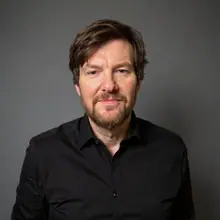
About the author
Stefan von Gagern is a consultant, trainer, and speaker on GEO-optimized content. With contentbird, he built and led an AI content marketing academy with more than 500 participants. Twenty years in editorial and content, 17 of them as a copywriter for brands, shape the way he makes AI topics easy to grasp. Since early 2025 he has worked on GEO with more than 20 clients, from enterprises like Salesforce to midsize companies. He is a published author and writes the LinkedIn newsletter GEO-Briefing.
→ More about Stefan